

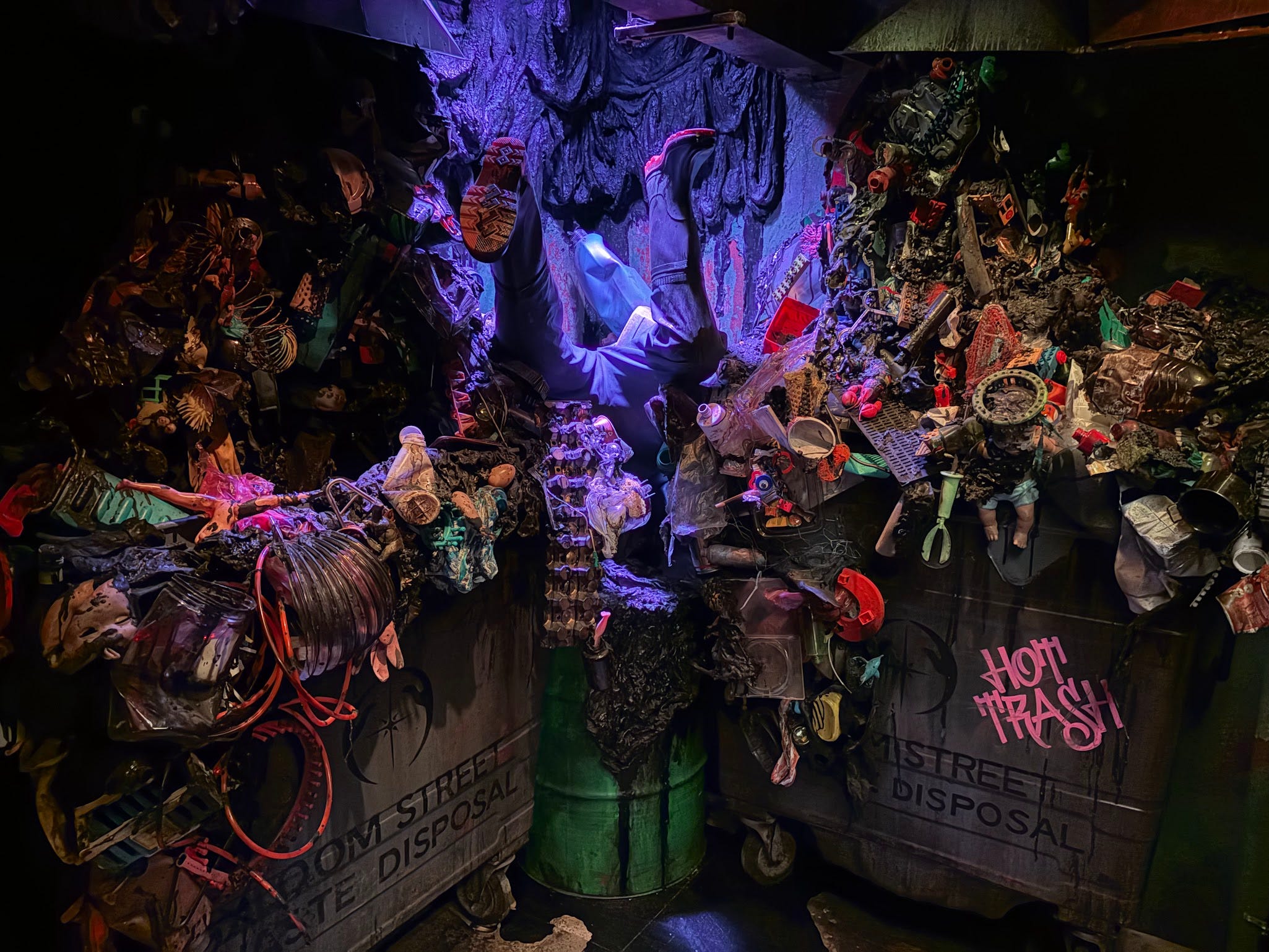
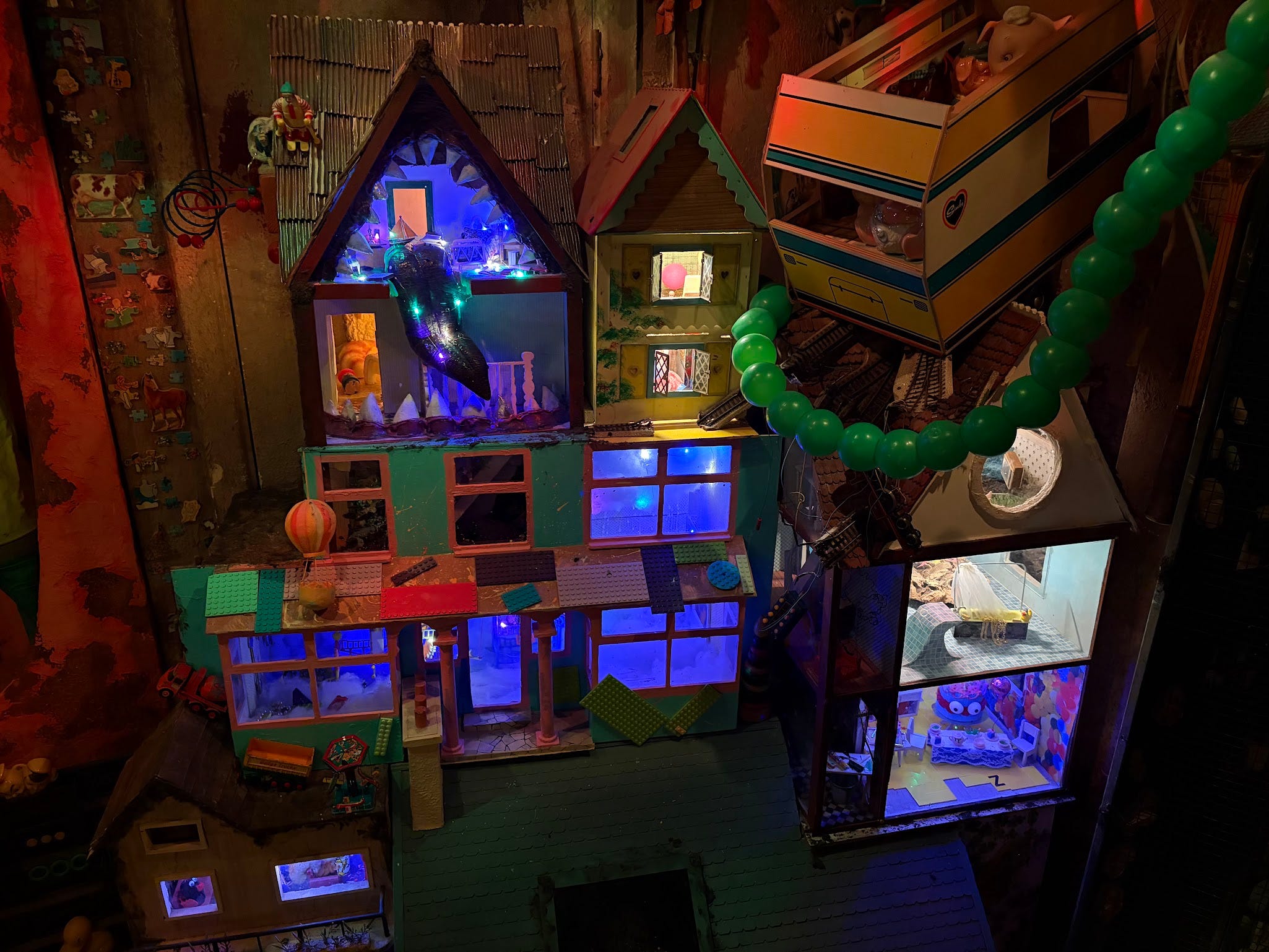
I’m standing in a cavernous junkyard. To my left, a double-decker bus has crashed through a wall. Above me, hundreds of dangling milk bottles refract neon light. Mechanical sculptures whizz and whir. Inhabitants lurk in the shadows and chatter nervously about the power cuts.
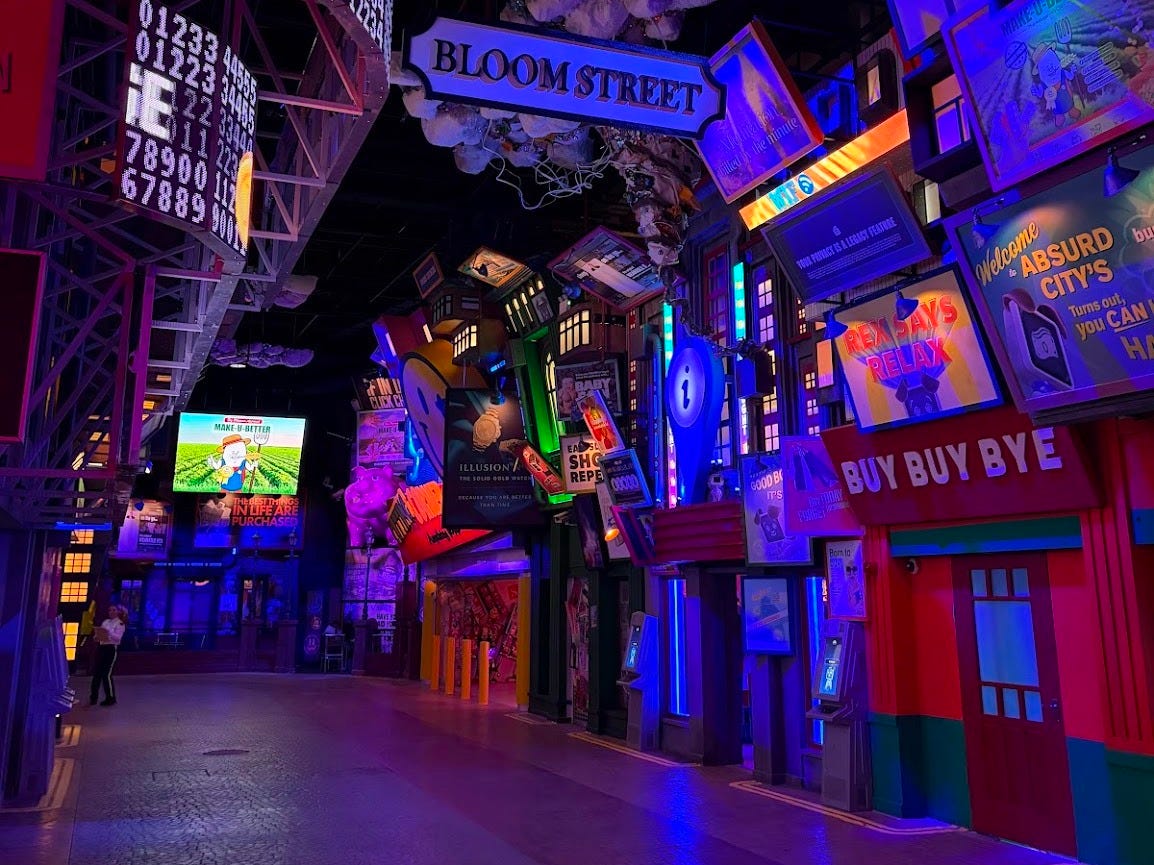
This is Reclaimia, the fourth of five explorable districts in Absurd City, London’s newest immersive attraction where much of the scenery is beautifully repurposed from scrap materials.
My guide today is Graham MacVoy, the visionary behind this place, and he’s leading me through his 80,000-square-foot wonderland, a dystopian metropolis, with a grin as wide as the Cheshire Cat’s.
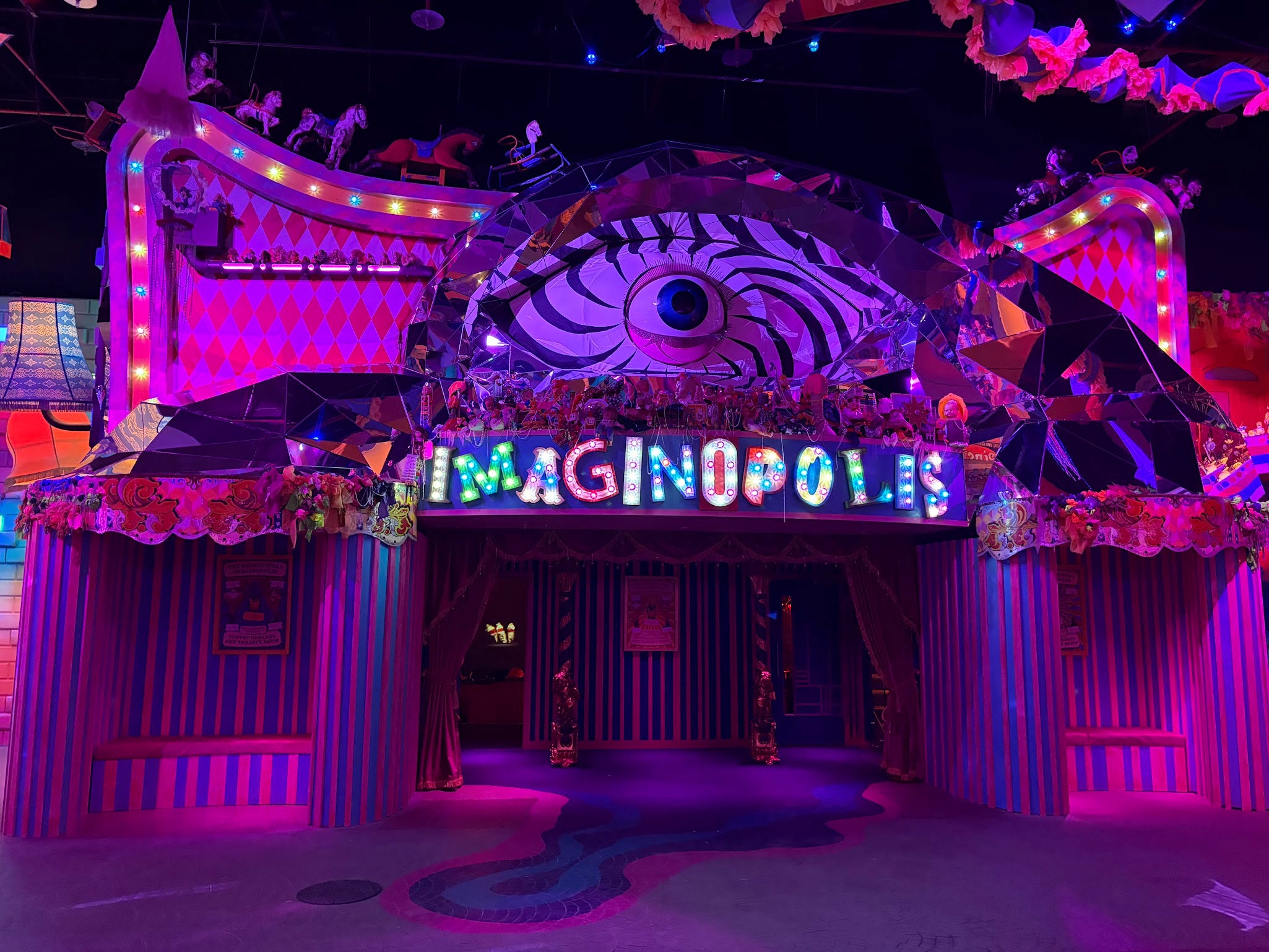
“There’s so much creativity in here,” Graham beams. “The point is discovery and play and trying things out and not just being told what to do.”
He points to Disneyland’s “imagineers”, the famed theme park creatives, as a source of inspiration.
“For us, it’s about getting people together. And Boomtown’s the same,” the cofounder adds.
Absurd City was built by a startup called Wake The Tiger, which has been running a prototype attraction in Bristol for four years. It was conceived during the pandemic when Graham and his fellow Boomtown festival organisers were experimenting with new concepts.
Wake The Tiger first opened in a Boomtown-owned warehouse as a permanent home for the style of surreal scenic art that adorns the theatrical underground music festival. Today, it operates as the immersive Dream Factory, set in the same sci-fi world of Meridia as the London site.
“Bristol is a pioneering city,” Graham says. “It leads the way in terms of culture, protest, music and art. I think that Wake the Tiger exemplifies what Bristol stands for.”
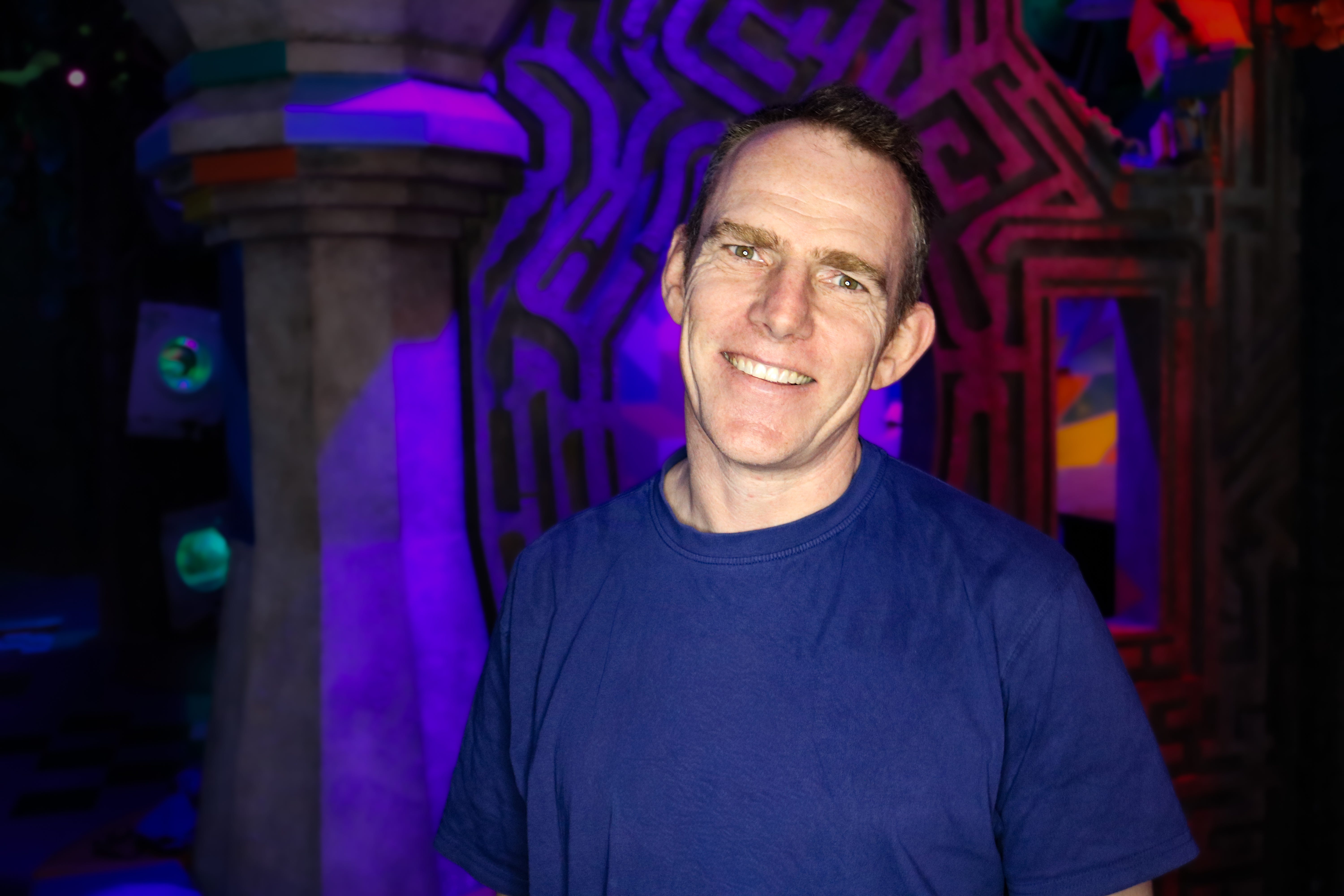
Graham moved to Bishopsworth in Bristol twenty years ago after snowboarding in the Alps for a decade. Prior to joining Boomtown, he helped produce numerous festivals from Bestival and Creamfields to Bristol Pride.
With an eight-figure price tag to justify, Graham is bullish that Wake The Tiger will become a top five tourist attraction in the capital.
Samantha Fay at Visit London predicts that Absurd City will be a big draw and a “great addition”. Her research shows that immersive experiences are “exploding” in popularity at the moment.
“I’m seeing a real shift in what people want,” she describes. “They wanna do something really different and memorable and to sort of explore and interact and discover. People don’t want to just watch stuff anymore.”
When it opens to the public, guests will roam free through Absurd City at their own pace.
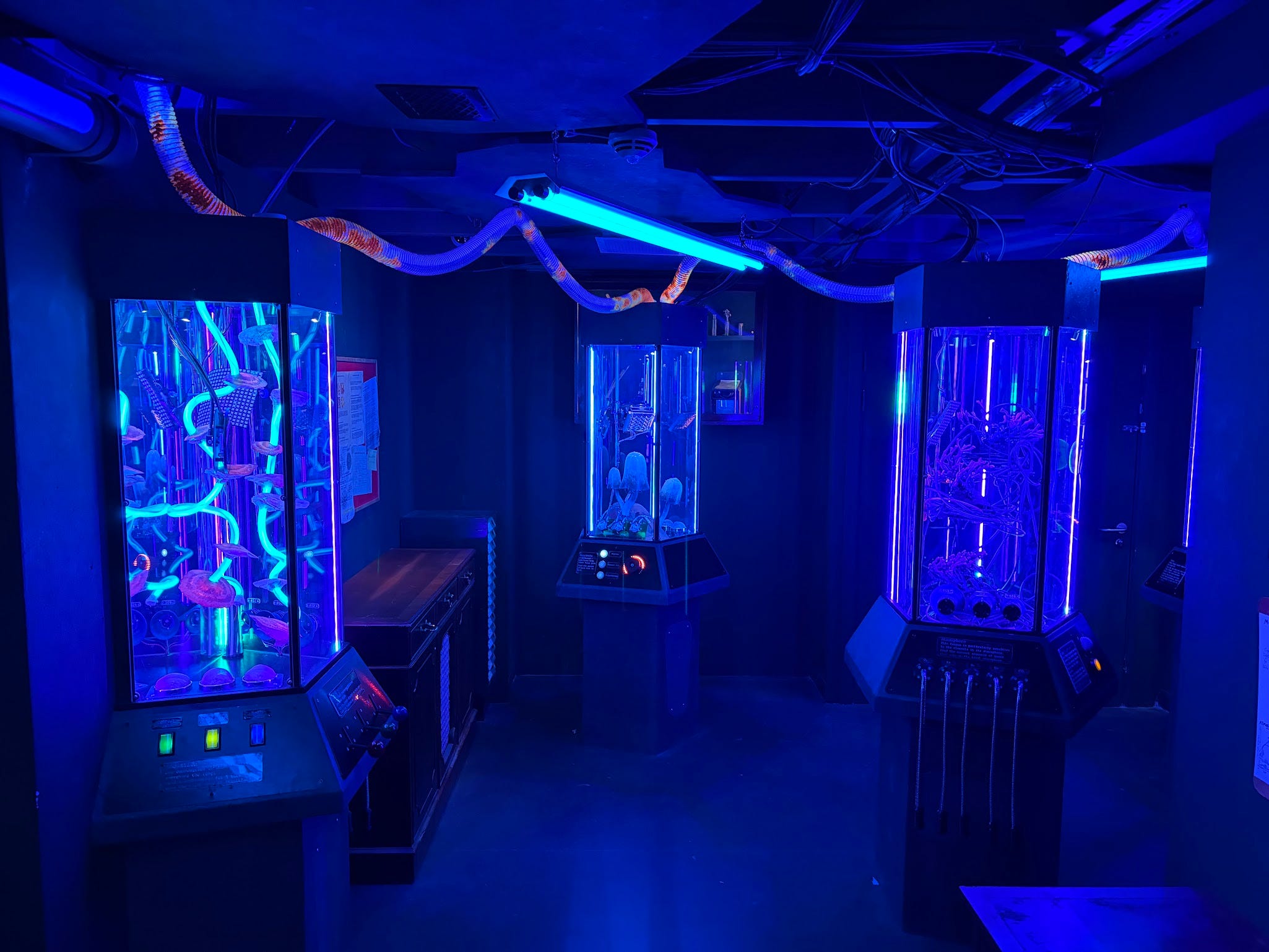
Samantha defines Wake the Tiger as a “blend” of Alice in Wonderland, the world-building of Secret Cinema and an immersive exhibition she visited overseas called Meow Wolf.
Meow Wolf began as a scrappy cluster of Santa Fe artists in 2008 and has since expanded into five permanent venues across the United States. It has attracted 13 million guests to date and plans to open Los Angeles and New York City locations by 2028.
The company says its name has become shorthand for the entire category of “immersive” and points to its Denver location, with five floors of alien worlds, as its pièce de résistance.
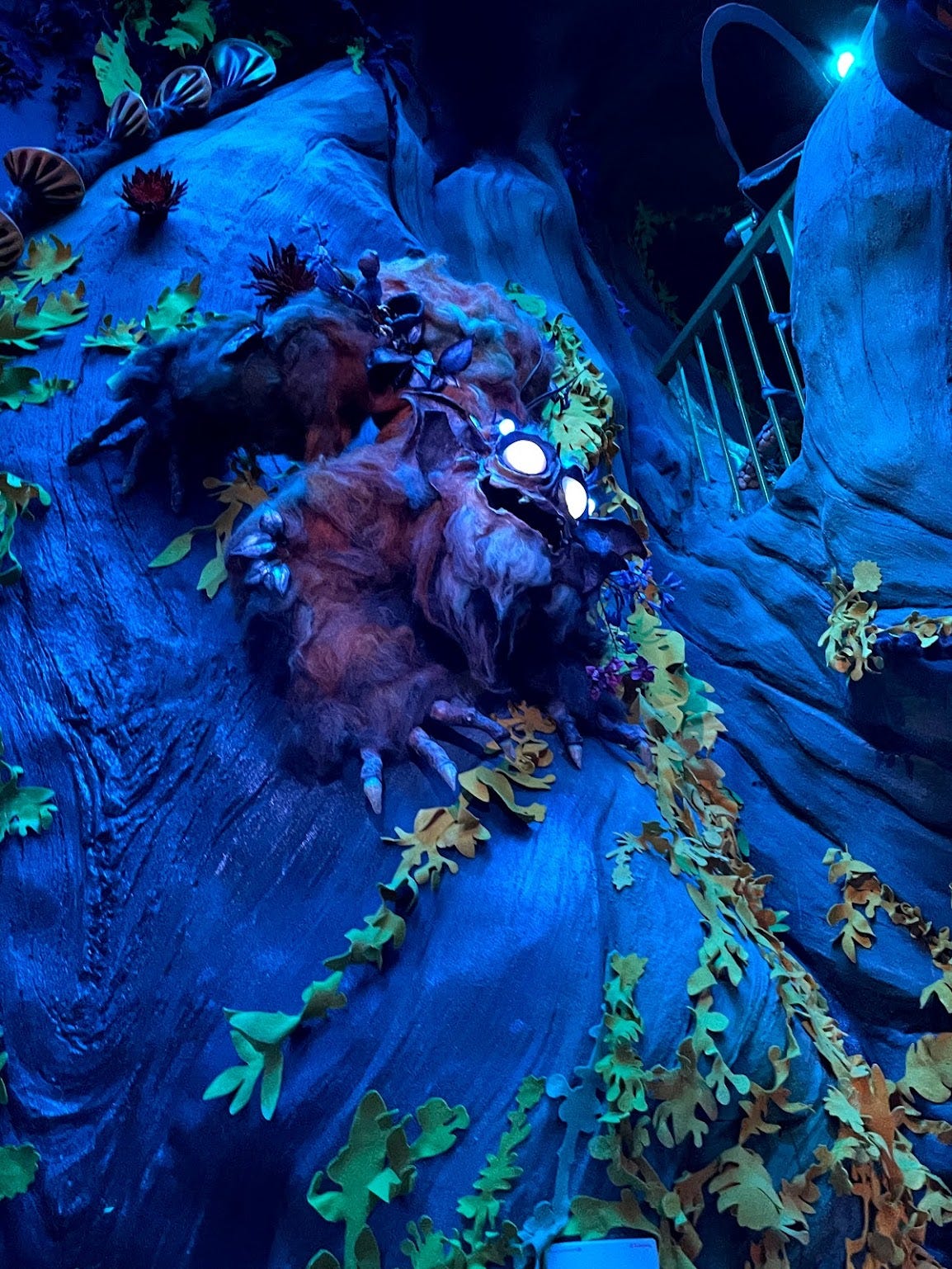
Wake The Tiger recently faced accusations of copyright infringement from Meow Wolf, but the matter was settled confidentially in March 2025.
“It was very disappointing,” sighs Graham.
“They started around the same time as an art collective doing art stuff,” he explains. “Wake The Tiger has evolved out of British culture and came out of the underground rave scene and the skateboarding and snowboarding space.”
Homages to the Wake The Tiger’s origins are peppered throughout Absurd City, including a glowing installation from Boomtown and a light show created by the designers of Shangri-La at Glastonbury.
“We did our own thing. We’re really pleased for them doing their thing, but we’re doing our thing,” stresses Graham.
“Both have LED lights in them, so they’ve got a similar colour, but in terms of comparison to other things, I don’t think there’s anything like this in London, the UK or Europe.”
A Meow Wolf spokesperson says that bringing Meow Wolf across the Atlantic is a “long-held ambition”, but they have no concrete plans at the moment.
Catching our breath in the rave-themed cafe after a nearly two-hour walkabout, Graham reflects on the “marathon” it took to make Absurd City possible.
“To build a business in four or five years, to go from an empty warehouse in an industrial estate to something like this is a huge, huge achievement for everyone that’s been involved.”
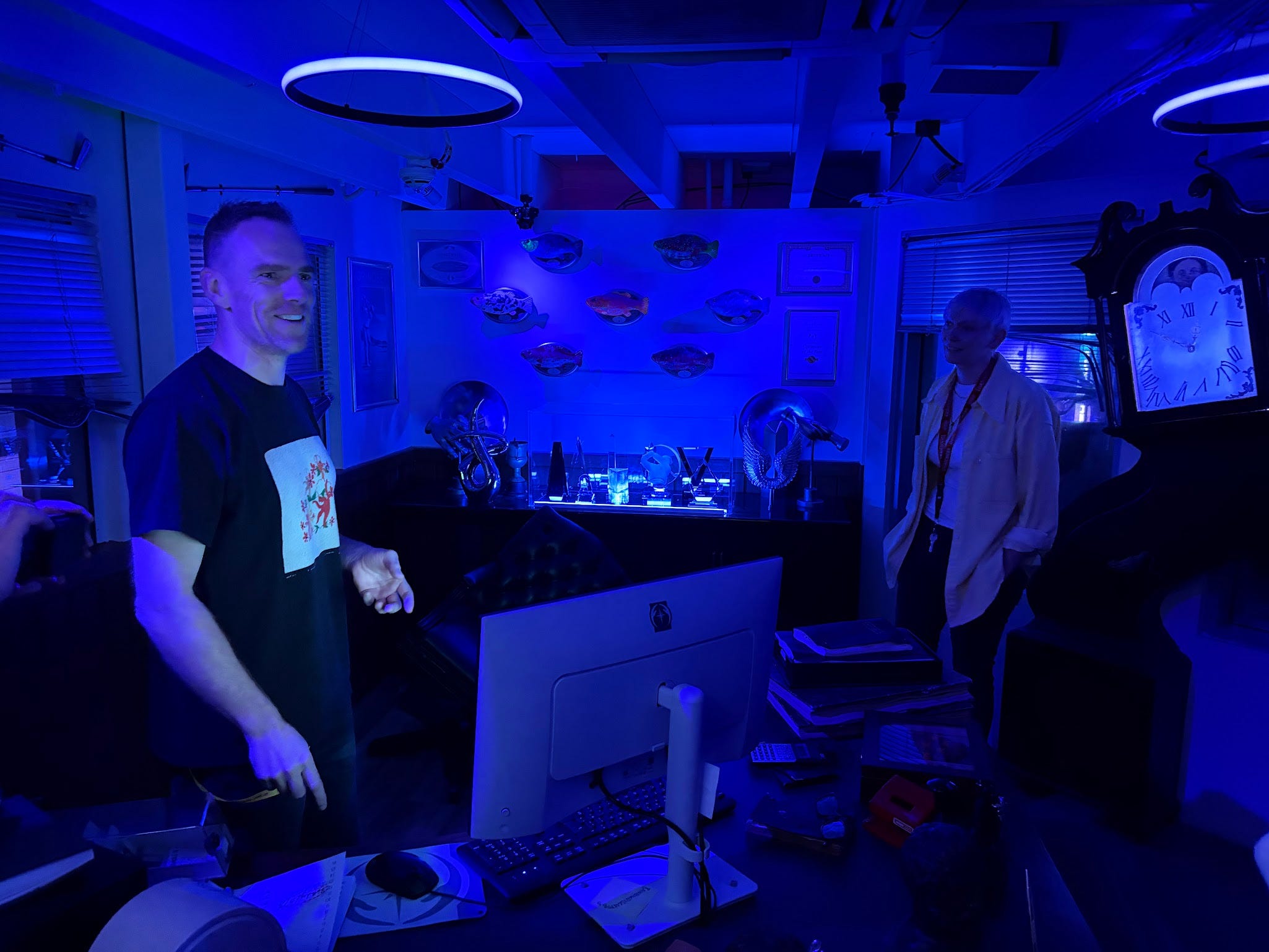
He credits creative directors Summer Dean and Anya Tye, as well as narrative director Rob Morgan, for their close-knit teamwork, supportiveness and constant bouncing of ideas off of one another.
Under their watchful eye, hundreds of artists have spent a year painstakingly building the space’s installations and interactive elements. The finished product brings a “slice” of Graham’s in-progress trilogy of YA sci-fi novels about Meridia into the real world.
One of Graham’s goals is to creatively platform issues like climate change, inequality and social disconnection, as a “call to action wrapped in wonder”. In Absurd City, characters are racing to restore people’s freedoms and to reduce the population’s energy consumption.
Artist and former Disneyland imagineer Maggie Parr, who worked on scenery and rides all around the world, is fascinated by the concept of Wake The Tiger and its sustainability ethos.
She says: “I think that the salvage and upcycling really speaks to this moment where we, as a human species, are thinking a lot more about how our stuff becomes pollution and how we can reuse things.”
“Wake The Tiger is a really interesting idea. It seems to have more narrative, intention and even politics behind it. People who go to Disney definitely do not wanna think about politics or world issues. They want to be lost in fantasy,” Maggie chuckles.
“It’s about trying to plant a seed but without preaching,” Graham says. “When you do that, no one listens.”
Graham adds that Wake The Tiger has been “really hot” on following best practices championed by Disneyland imagineers like Maggie, including consistency of storytelling and an obsession with guest safety.
Mark Eades, retired Disney imagineer and theme park reporter, thinks that Absurd City’s Westfield London setting is “wonderful” because of the built-in utilities and parking.
He says: “There’s room for more of these kinds of places because people are desperately seeking to go to a place that gives them a family experience, kinda like Disneyland, but without the Disney expense.”
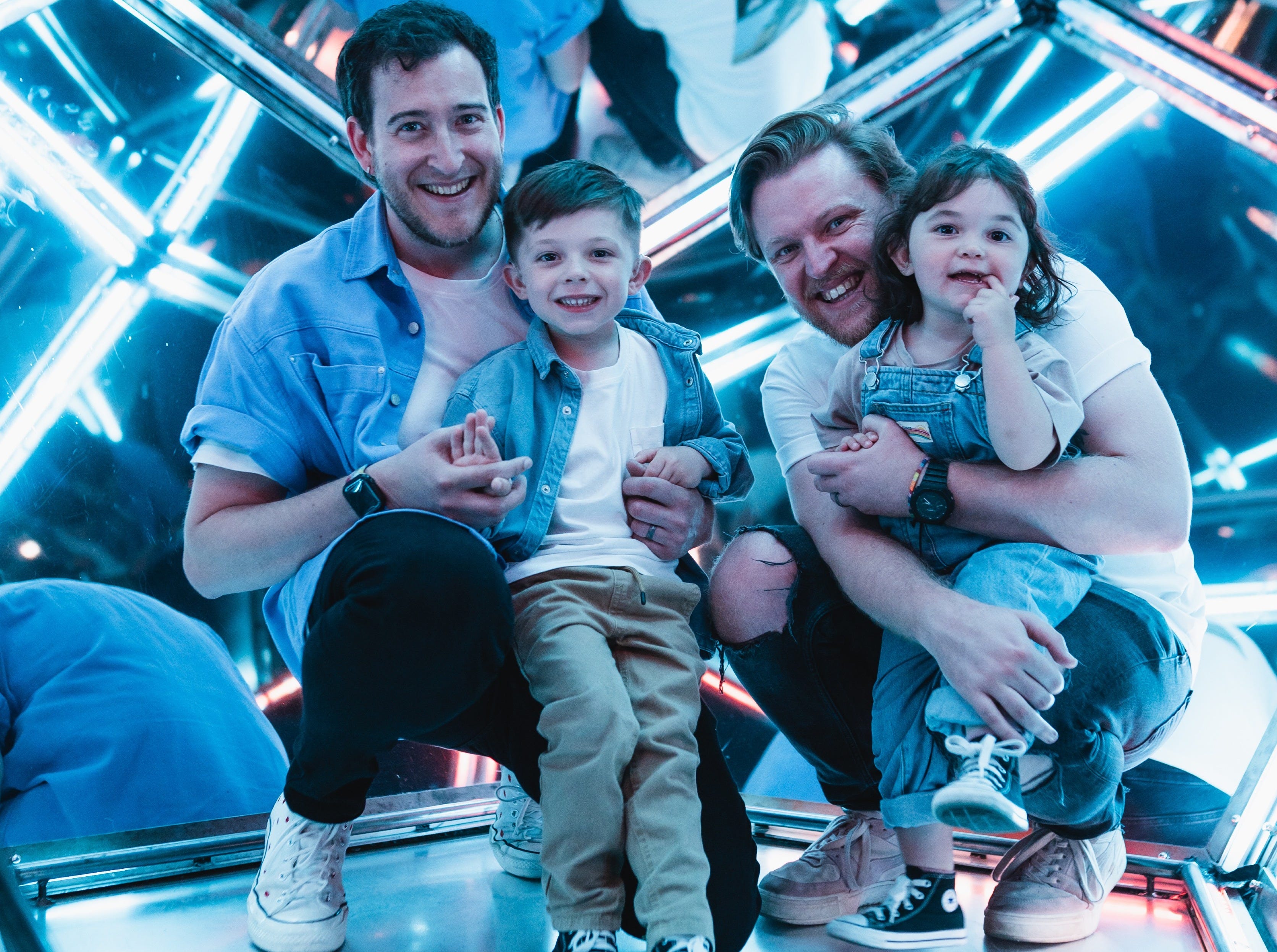
Graham adds: “We really believe we’ve delivered something that is going to appeal to all demographics and is suitable for all abilities.
“There aren’t many things that can genuinely tick that box, and for us it’s a big one and is a big part of the appeal.
“You can come with a kid and a grandparent and a teenager and everybody has fun.”