

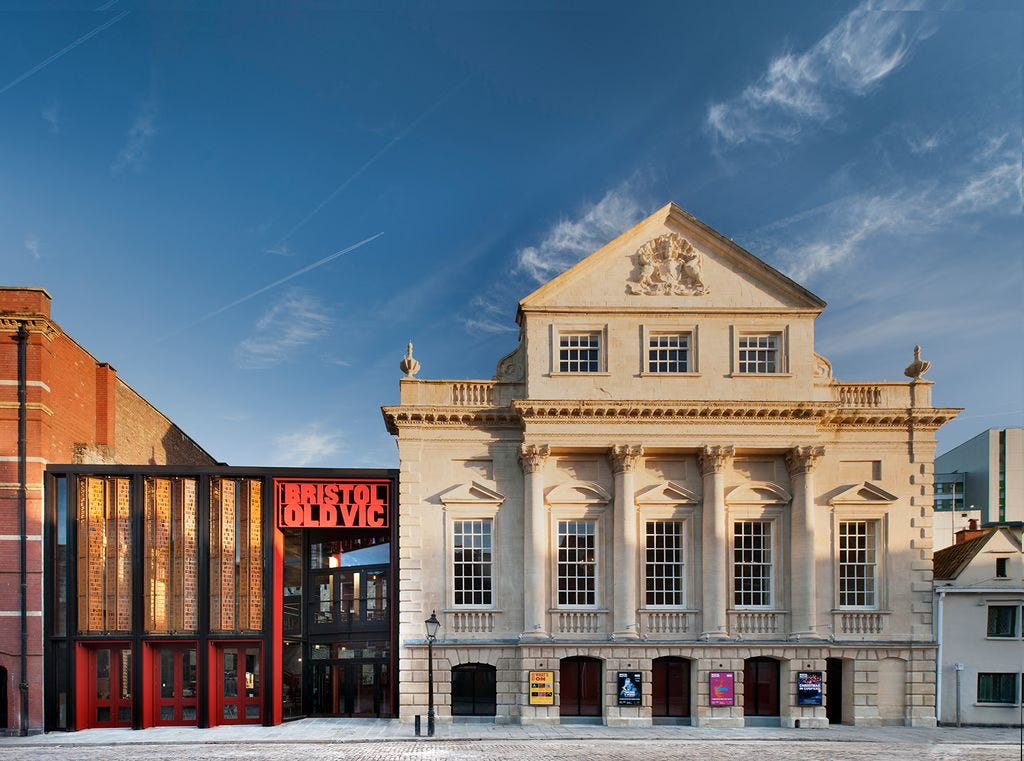
The dark autumnal night disappears behind me as I cross a cobbled street and enter the glow of the oldest theatre in the English-speaking world, the Bristol Old Vic.
This warm threshold has watched folks come and go for centuries. The historic walls have witnessed the origin stories of British acting royalty time and again, from Olivia Colman to Sir Patrick Stewart.
Tonight, I’m welcomed in from the cold with a smile by Nancy Medina, the Old Vic’s artistic director.
Three years into her tenure in this prestigious post, Nancy tells me that her central ambition is to diversify stories in theatre.
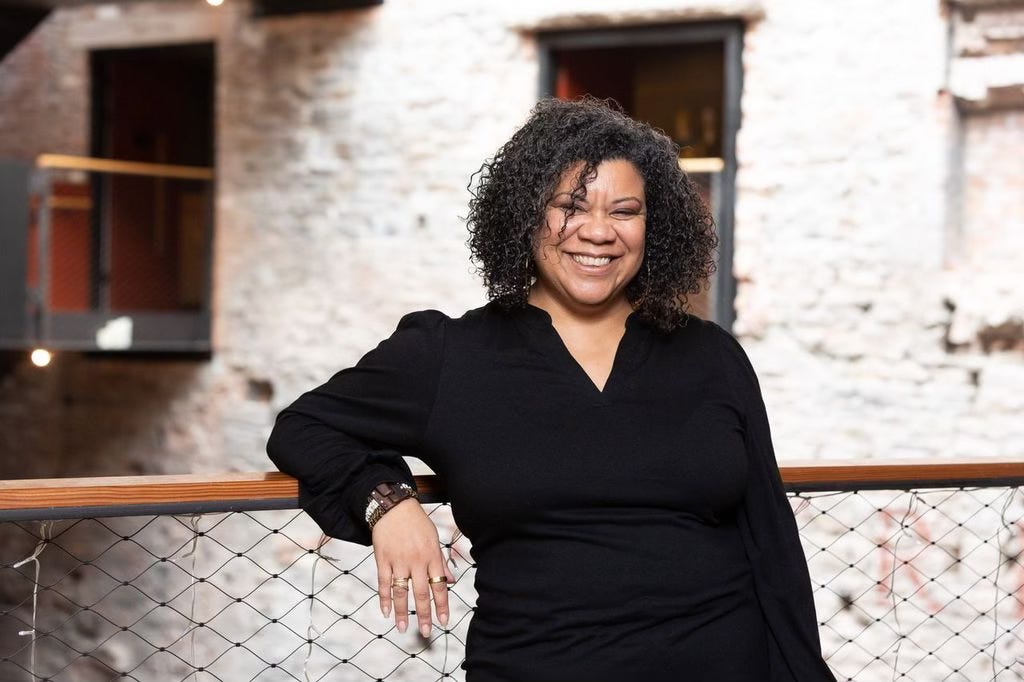
The challenge she has set herself, she explains, is to put value into new writing, stories and voices that can become the “classics of the future”.
“I think that we are very reliant a lot of times in the theatre of bringing back the old titles over and over again, and some of them I absolutely understand why, because they’re just wonderful masterpieces. But I sometimes think we need to make space for the future masterpieces,” Nancy adds.
Nancy’s aim to “tell the stories of who we are” takes centre stage in the flagship production of the season, Lanny, which she directed.
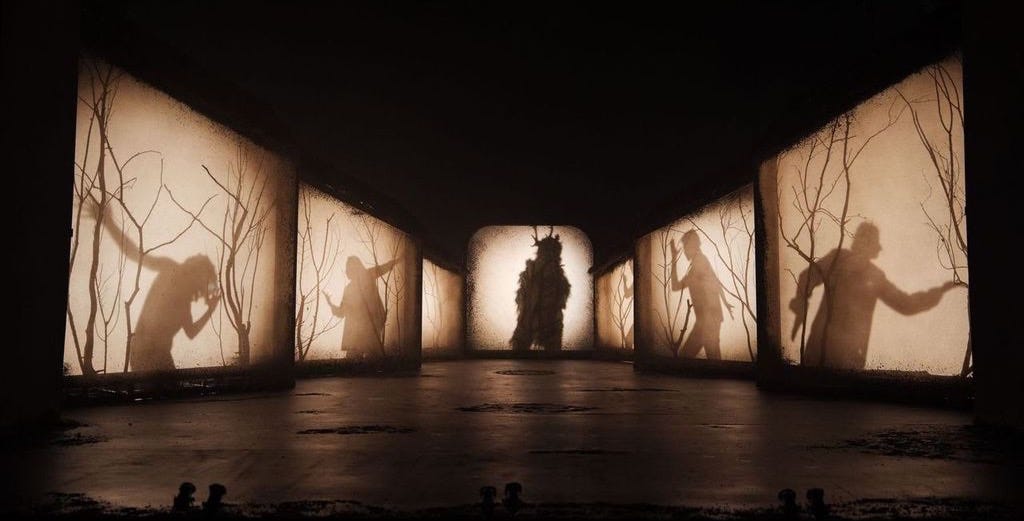
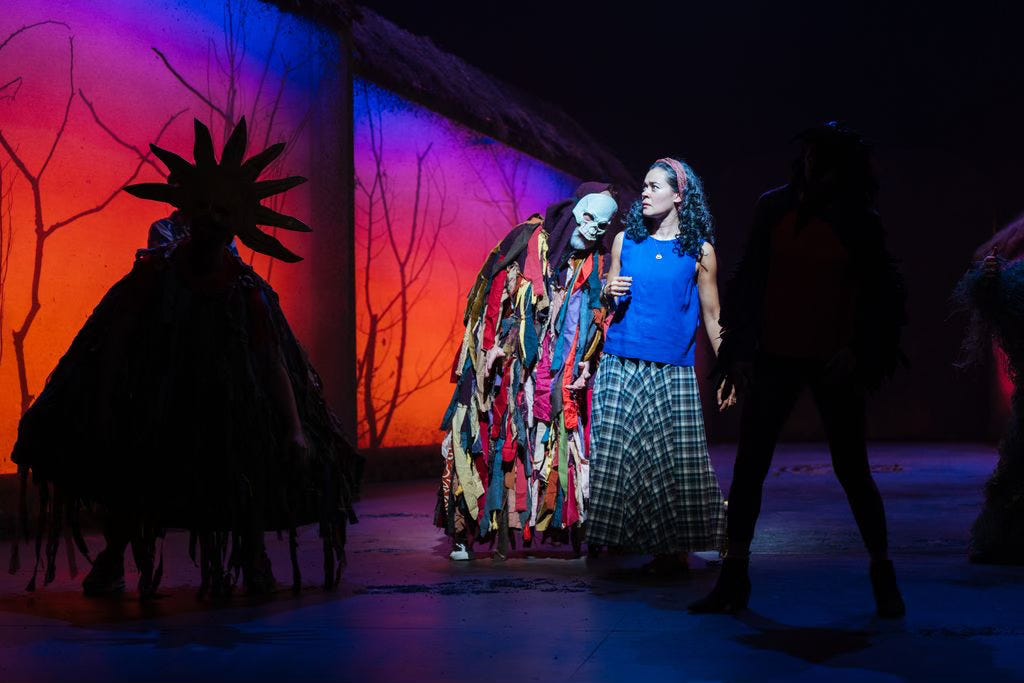
The dark and enchanting drama is an adaptation of the Booker prize nominated novel by Max Porter. It tells of a city family’s relocation to a Somerset village steeped in superstition where the locals’ increasingly overt racism and homophobia runs as rife as their haunting tales of a woodland boogeyman.
Since moving to the UK from America 18 years ago, Nancy has been spellbound by English and Welsh folklore.
“There is so much magic here in the South West and I just wanna see more of it on our stages.
“Why that feels sort of slightly hidden away in the rest of the country, I don’t know, but it feels so palpable here.
“It’s a huge ambition for us here at Bristol Old Vic to tell more West Country stories and to really platform that there is so much originality here,” she adds.
Nancy defines folklore as the stories that we tell about ourselves.
“I really think you understand so much about a people when you understand what still exists and what we keep going.
“It’s really important to remember that we’ve existed and that we’ve had a moment in time as humans with other humans, and to continue that.”
Nancy has been surrounded by storytellers and storytelling for her entire life.
She has happy childhood memories of gatherings in her Latin American family’s New York City home.
She says: “Before I realised what theatre was and that theatre does this thing, I already knew what theatre was. It happened in my living room.”
Often accompanied by drums and guitars, her brothers and uncles would take it in turns to share stories.
“Bible stories were really important to my family. There is a real strong oral tradition in our culture and so there are just so many stories. The importance of it is that there is a gathering.”
Nancy’s father, a former professional dancer, encouraged his five children to dance and exchange stories rather than be glued to the television set.
“It was magic,” she sighs.
Nancy also spent a handful of formative early years in the Dominican Republic, her family’s ancestral home.
She delights in remembering “moments of wonder” with me, including playing chasing games with mischievous performers at the Dominican Carnival.
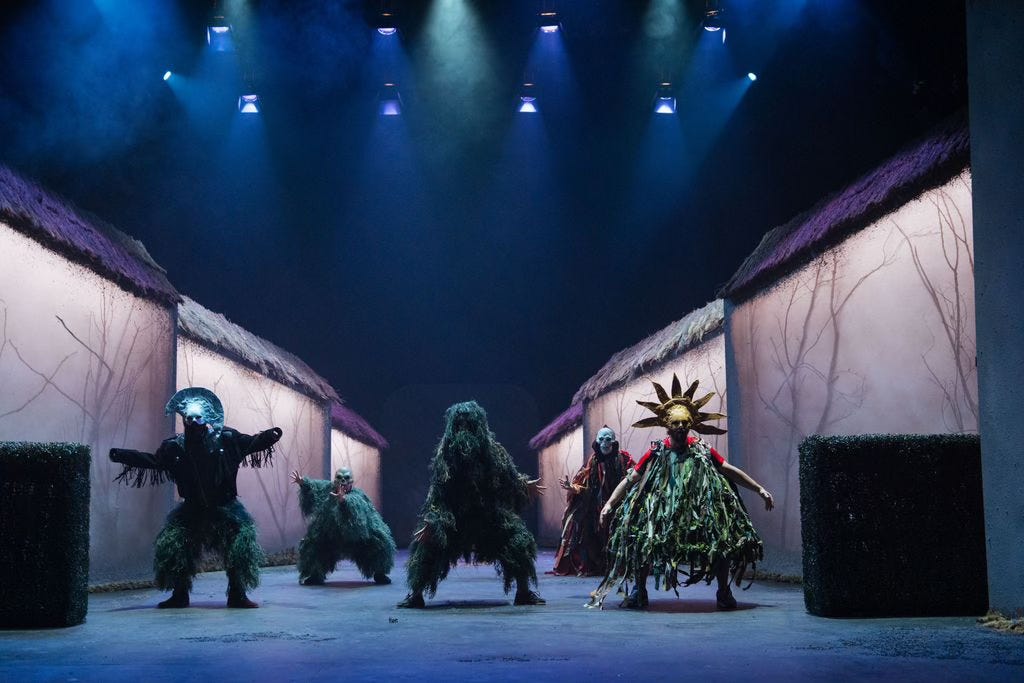
The Diablos Cojuelos (Limping Devils) wore monstrous masks and bright costumes with bells on.
Nancy says she leans into this visual aesthetic and Latin American-inspired magical realism in Lanny, infusing it into a scene where the summer solstice is celebrated by Somerset villagers.
“It is still one of the most magical things ever. You just had this carnival come to your front door, and you’re in it. You’re in the tradition and in the ritual of what this experience is.
“The ritual of it is very long and deep and has lots to do about who we are and enslavement, beating the oppressor and the stories we tell ourselves,” she reflects.
Nancy’s biggest inspiration today is new writers.
She says: “Writers to me are awe-inspiring human beings. It’s a real tender and vulnerable thing, and that inspires me as well — the bravery to do this thing for the first time together.”
Creating a 5 Year Commitment scheme at the Old Vic, Nancy has brought together four writers to invest in their careers and to help develop new British writing.
Now in its second year, Hannah Khalil, Sam Parker, Muneera Pilgrim, and Winsome Pinnock are all under commission.
Nancy teases that studio plays from Sam and Muneera will be announced soon.
At a recent week-long residential, Nancy says she “basked in their amazingness” as the writers shared skills, tools and read work aloud together.
Nancy set out to make the scheme an experiment in committing to the development “not of an idea, but of an artist”.
She explains: “That was really important to me, that it wasn’t gonna be like, ‘All right, let’s just choose these writers, and then we’ll tell them what to write.’ No.
“We’re choosing these artists because their voices are so strong. Now let’s support them and guide them to whatever they need to be talking about in this moment.
“You don’t know what you’re gonna get, but you trust that these writers are gonna deliver something amazing, and they already have.”
Looking back at her first three years as artistic director, Nancy says it’s been an “immense privilege”.
“I try to be as present as possible and really enjoy the fact that I get to do this, that I get to work in creativity all day long. And my highlight is always being in the rooms where workshops and R&Ds are happening.”
She is tight-lipped about a rehearsal for Cinderella she watched last week but grins about the “joyous” reimagining and its strong female protagonist: “Cinderella got a tongue on her!”
Like with Lanny, Nancy hopes this upcoming festive production will remind folks of “possibility and imagination”.
Finally, Nancy shares her thoughts on the difficult economic climate for creative organisations.
“It has been one of the toughest moments for the theatre industry.
“We need so much more money to actually accomplish the things that should be accomplished. But we do what we can.
“I continue to fight for the value of arts and artists. And if I can’t do that any more, then there’s a problem.”
She seeks to change minds that see theatre as dispensable or “something for the rich” and show instead that it can be “transformative for all of us in life.”
Nancy points to skills of empathy, confidence, and creativity that are nurtured in youth theatre groups. She sees these abilities transferring into other fields like the sciences and also helping young people grow into kind and well-rounded human beings.
“It keeps me energized, knowing that we’re fighting the good fight.”